Tickets, seats and the day itself
Kabukiza tickets: how to book Kabuki
Full show or single act, how the voucher swap works, what the captions cover and when to eat, checked against the Kabukiza's own visitor pages.
See Kabukiza tickets on GetYourGuide ↗Quick answer
For a first visit, book a full show (the matinee or the evening performance) with the captioning device included, and get to the theatre 45 minutes early to swap your voucher at the basement box office. If you only have an hour or so, a single-act seat on the 4th level, sold by the theatre itself, is the short alternative. Each month's programme goes on sale around the 14th of the month before.
Three ways into the Kabukiza
| Full show on GetYourGuide | Full show, booked direct | Single-act seat | |
|---|---|---|---|
| Sold by | Shochiku, which runs the Kabukiza | Shochiku's site or box office | The theatre, ahead or on the day |
| You see | One full show | One full show | One act, 20 to 90 min |
| Seats | Assigned, best available | You pick the area | 4th level, or upgraded 2nd level |
| Captions | Included | Extra, cash only | Extra, cash only |
| Cancellation | Free up to 2 days before | Theatre's terms | Theatre's terms |
| Best for | Booking in English, in your currency | Choosing a seating area | A short first taste |
Full show or single act?
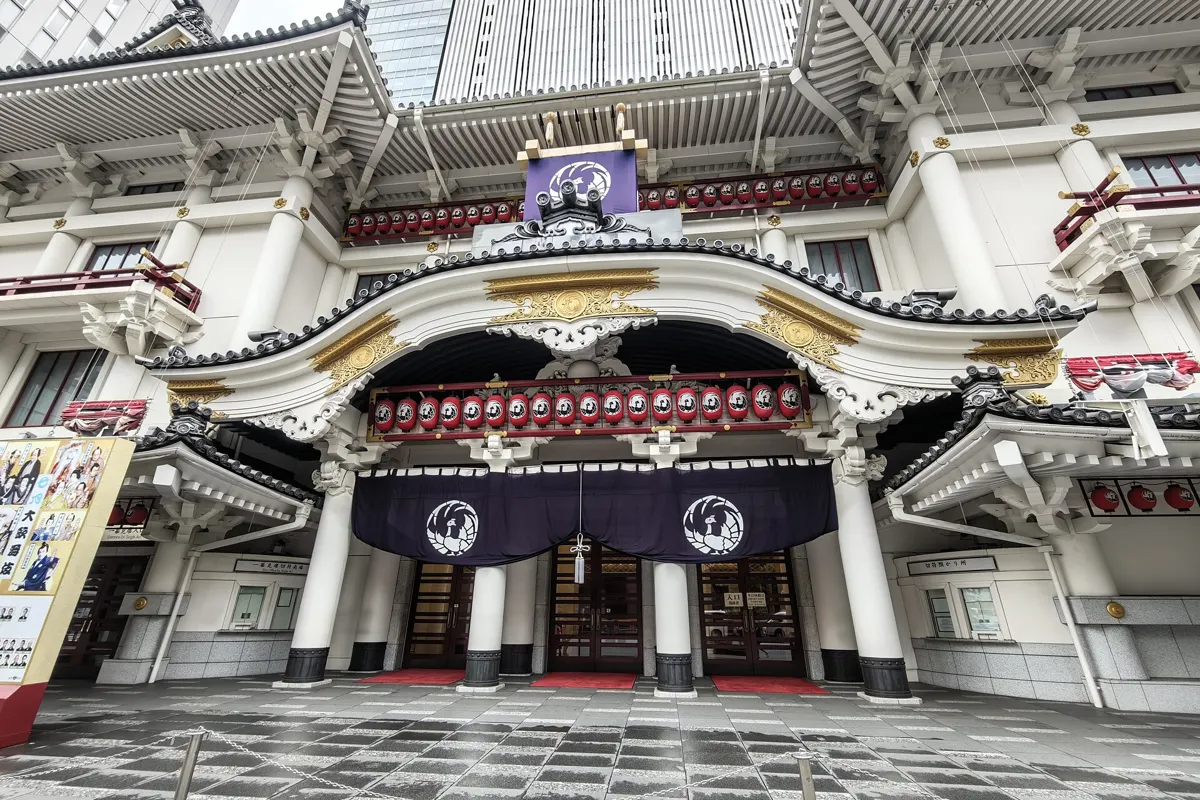
A Kabukiza show isn't one play. Each show strings together several pieces, usually a mix of dance and drama, so a full show gives you contrasting styles in one sitting. Most months run a matinee from 11:00 and an evening show later in the afternoon, each three to four hours including intermissions. Some months split the day into three shorter parts instead. A single-act seat lets you watch just one piece, from about 20 minutes to 90, depending on that month's programme.
- Full show: the whole matinee or evening, with a break of about 30 minutes to eat
- Single act: one piece, no intermission, watched from the top of the theatre
- The programme changes every month, so which plays you see depends on your date
When tickets go on sale
Each month's programme opens for booking around the 14th of the month before. November 2026 shows went on sale on 14 October, for example. Some dates sell out of reserved seats. Single-act seats are sold separately, so they can still be available when the full show is gone. If a date shows as sold out online, the theatre says its box office may still find you a seat.
How the GetYourGuide ticket works on the day
Your booking is a voucher, not the ticket itself, and you can't walk into the theatre with it. Take the PDF, or the voucher on your phone, to the box office on basement level 2. It's open 10:00 to 18:00 and swaps the voucher for your paper ticket. If you arrive after 18:00 for an evening show, go straight to the theatre entrance instead. Doors open 30 minutes before the curtain. The theatre picks your seat when you book, from the best still available, and it sells seats within Japan at the same time. Booking early tends to get you a better seat.
- Bring the voucher: the PDF or the one on your phone
- Swap it at the box office on basement level 2, in Kobikichō Square
- The captioning device is included and handed out on the ground level
- This ticket isn't suitable for children under 4
Following the plot: captioning
Kabuki is performed in Japanese, so the captioning device does a lot of work. Since July 2024 the theatre has offered a handheld captioning service in English or simplified Chinese. It shows translated dialogue and lyrics, plus short notes on what's happening on stage. It's included in the GetYourGuide ticket. If you buy direct, you rent it on the day, cash only. For more background, the Japanese programme sold in the theatre has an English synopsis at the back, and free English flyers are available.
Read next: What is Kabuki? Origins and its two acting styles
Food, drink and the intermission
Eating at your seat is part of a Kabuki visit, but only during intermissions, never while the curtain is up. Buy a bento box or sandwiches at Kobikichō Square on basement level 2 before the show, or bring your own. Drinks and snacks are sold on levels 1 to 3. Hanakago, the bar on level 3, serves beer, sake and wine with a view over Ginza. At the ground-floor souvenir shop, look for ningyō-yaki, small cakes filled with sweet red bean paste. Single-act seats have no intermission and no access to the shops on levels 1 to 3. The 4th level has vending machines only.
Theatre etiquette
There's no dress code: what you'd wear to go shopping is fine. The rules that matter are about not blocking or disturbing the people around you. There's no cloakroom, but coin lockers in two sizes are available from opening time. Keep your valuables with you.
- Take off your hat, and keep tall hairstyles low
- No photos or video during the performance
- Switch phones and smartwatches off, not just to silent
- Keep your back against the seat so you don't block the row behind
- Unwrap snacks before the act starts, because the theatre specifically asks you to mind the sound of plastic
Single-act seats: what to know
The 4th level is the top of the theatre and the furthest from the stage. Parts of the main stage and the hanamichi can be out of sight. The hanamichi is the walkway through the audience that actors use for big entrances. A railing also sits in front of the first row. Prices and start times change every month, and the theatre publishes them on its news page. It advises checking again on the day, because times can shift slightly. Captioning is available on the 4th level too, rented separately.
Read next: The hanamichi, revolving stage and Kabuki stagecraft
Getting there
The Kabukiza is at Ginza 4-12-15, Chūō-ku, with direct access from Higashi-Ginza Station on the Hibiya and Asakusa subway lines. From Exit 3 it's about a minute's walk to the Kabukiza Tower. The box office and Kobikichō Square are underground on basement level 2, so allow a few extra minutes to find them on your first visit.
Before or after the show
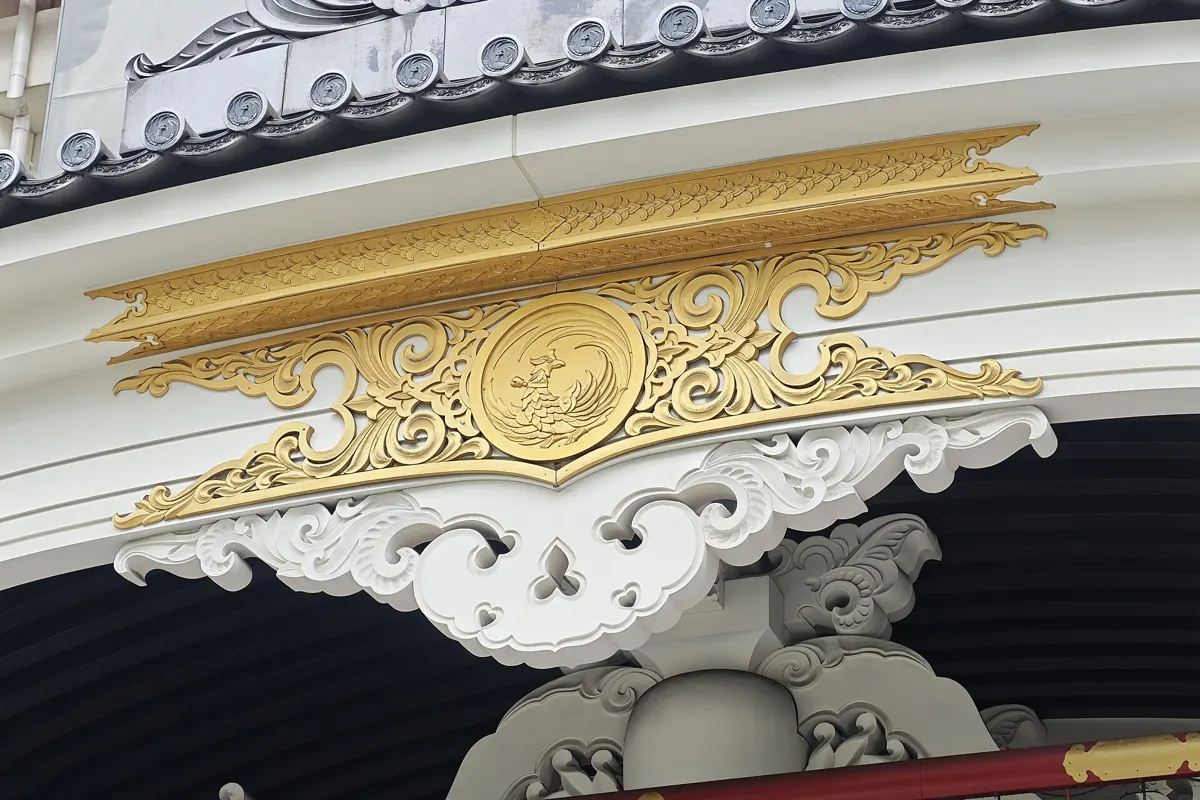
You don't need a ticket for the shops in Kobikichō Square or the ground-floor souvenir shop. On the 5th floor of the Kabukiza Tower, the Kabukiza Gallery is open 10:30 to 18:00 with changing exhibits on Kabuki. From the same floor you can walk out onto the Japanese garden on the theatre's roof. From the garden staircase, look closely at the roof tiles. They carry the theatre's crest, a phoenix in a circle, and the phoenixes all face left except one. Finding it is said to bring good luck.
Who this isn't for
If you're travelling with children under 4, the GetYourGuide ticket won't work. If you have less than two hours, a full show is too long, so try a single act instead. And if sitting close to the stage matters most, book as early as you can, because seats on this ticket are assigned, not chosen.
Frequently asked questions
How long is a Kabuki show at the Kabukiza?
A full matinee or evening show runs about three to four hours, including a break of about 30 minutes. In months split into three parts, each part is shorter. A single act lasts roughly 20 to 90 minutes.
Can I buy Kabukiza tickets on the day?
Often, yes. If seats remain, the box office on basement level 2 sells full-show tickets on the day, even after the performance has started. Unreserved 4th-level single-act seats are also sold on the day. Popular dates can sell out in advance.
Do I need to speak Japanese to enjoy Kabuki?
No. The captioning device shows English or simplified Chinese translations of the dialogue and lyrics, with short explanations. It comes with the GetYourGuide ticket. If you buy direct, you rent it for cash on the day.
Can children go to the Kabukiza?
The theatre has no general age limit, but children aged 4 and over need their own ticket, and some productions set their own rules. The GetYourGuide ticket isn't suitable for children under 4.
Is there a dress code at the Kabukiza?
No. Everyday clothes are fine. Take off your hat during the performance, and keep tall hairstyles low so you don't block anyone's view.
Can I take photos at the Kabukiza?
Not during the performance: photos and video are forbidden while the play is on. You can visit Kobikichō Square and the ground-floor souvenir shop without a ticket.
Sources