The art of the female role
Onnagata: why Kabuki actors are all male
Why Kabuki has been all male since 1629, how onnagata actors create female roles, the famous names, and where to watch them at the Kabukiza in Tokyo.
See Kabukiza tickets on GetYourGuide ↗Quick answer
Yes, in mainstream Kabuki every role is played by a man. Women were banned from the stage in 1629, and the young men's troupes that replaced them were banned in 1652, so adult men took every part. Female roles belong to the onnagata, also read oyama: male actors who train for years in a stylised way of moving, speaking and dressing. The aim isn't to copy a real woman. It is a stylised femininity created for the stage.
From Okuni to an all-male stage
| When | What changed |
|---|---|
| Early 1600s | Okuni's dances draw Kyoto crowds |
| 1629 | Women banned from the stage |
| 1652 | Young men's troupes banned |
| 1653 | Theatres reopen, forelocks shaved |
| Meiji era, 1868-1912 | Ban on women lifted |
| 1953 | All-female Ichikawa troupe debuts |
What onnagata means
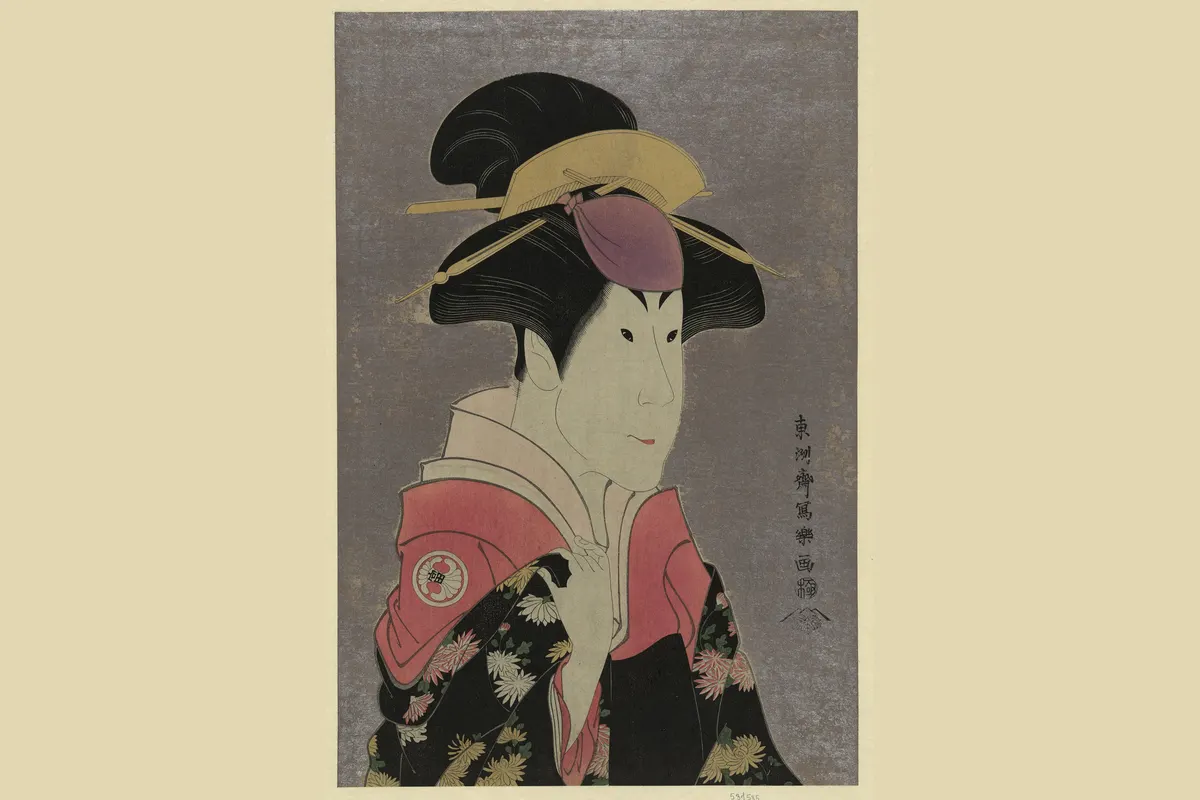
Onnagata is the word for a Kabuki actor who plays female roles, and for that style of acting. It means roughly 'woman role'. The -gata part means a role or line of work, as in other Japanese theatre terms. You will also hear it read oyama, mostly in compound titles such as tate-oyama, the leading onnagata of a company. Onnagata is one of the three main role types in Kabuki, alongside tachiyaku, the virtuous male leads, and katakiyaku, the villains.
Why Kabuki became all male
Kabuki began in the early 1600s with a woman. Okuni, who called herself a shrine maiden from Izumo Taisha, became hugely popular in Kyoto, and all-female troupes soon copied her style in Edo, Osaka and beyond. Fights in the audience and the close links between performers and prostitution led the Tokugawa shogunate to ban women from the stage in 1629. Troupes of young men, known as wakashū-kabuki, filled the gap, but they drew the same attention and were banned in turn in 1652. The following year theatres were allowed to reopen on two conditions: actors had to shave their forelocks in the adult style, and plays had to rest on acting rather than looks.
Yarō-kabuki and the first onnagata
The all-male form that grew out of these rules was first called yarō-kabuki, or men's Kabuki. Men had begun playing women in the wakashū years, but now the onnagata became an established specialism. As shows grew from song-and-dance revues into layered dramas, role types multiplied: young and older women, honourable and villainous men, and comic parts. The shaved forelock was a problem for actors in female roles, so onnagata covered it with a small purple headscarf, the murasaki bōshi, until a ban on wigs was lifted. It still appears in a few older plays and as a ceremonial accessory. Some accounts also record a short ban on female roles altogether, lifted in 1644.
Not imitation: what onnagata are aiming for
Shochiku, the company that runs the Kabukiza, is clear that onnagata are not just imitating real women. The role is a theatrical creation, built on conventions refined over hundreds of years. Actors describe it the same way. Nakamura Shichinosuke II has said he isn't playing a woman but playing the onnagata role. Bandō Tamasaburō V compares it to the heroine of a great novel by a male author: a crafted work, and a kind of dream that exists only while it is on stage. In the Edo period the commitment went further. Onnagata were expected to dress and live as women offstage too, as part of their training.
How an onnagata builds a woman on stage
Every Kabuki actor is expected to learn onnagata technique, but specialists spend years refining it. The voice is a falsetto, held through the whole performance. It isn't meant to copy a woman's voice. It follows the intonations Japanese audiences associate with femininity, and it changes with the character. The makeup is quite different from that of male roles, and the body is reshaped through posture. These are the things to watch for:
- Shoulders slouched rather than squared
- Knees kept bent, with a feminine posture held throughout
- Smooth, graceful steps, even in geta, the raised wooden clogs
- A falsetto pitched to the role, from princess to townswoman
Costumes, wigs and stamina
The illusion is hard physical work. Shochiku notes that a top courtesan's costume, wig and tall wooden clogs together weigh more than 33 kilograms. Kabuki uses around 400 kinds of wig for female roles, against about 1,000 for male ones. Princess roles are called akahime, or red princess, after their red robes embroidered with gold and silver thread. Their wigs carry silver flower pins. The shapes that look most graceful from your seat are often the hardest for the actor to hold, so watch how an onnagata kneels, turns and rises in all that weight.
The roles onnagata play, and the ones they don't
Female roles are grouped into types, so you can read a character at a glance even on a first visit. Young women include the akahime princess and the machimusume, a spirited town girl. Older women include the katahazushi, a steadfast maid in a samurai household, and the sewa-nyōbō, a wife devoted to her husband. The three great princess roles are Yaegaki-hime, Yuki-hime and Toki-hime. Onnagata also play beautiful young men disguised as women, such as the thief Benten Kozō. Not every woman on stage goes to them, though. Female villains, like Yashio in Meiboku Sendai Hagi, are traditionally played by actors of male roles, and elderly women form a line of their own.
Famous onnagata to know
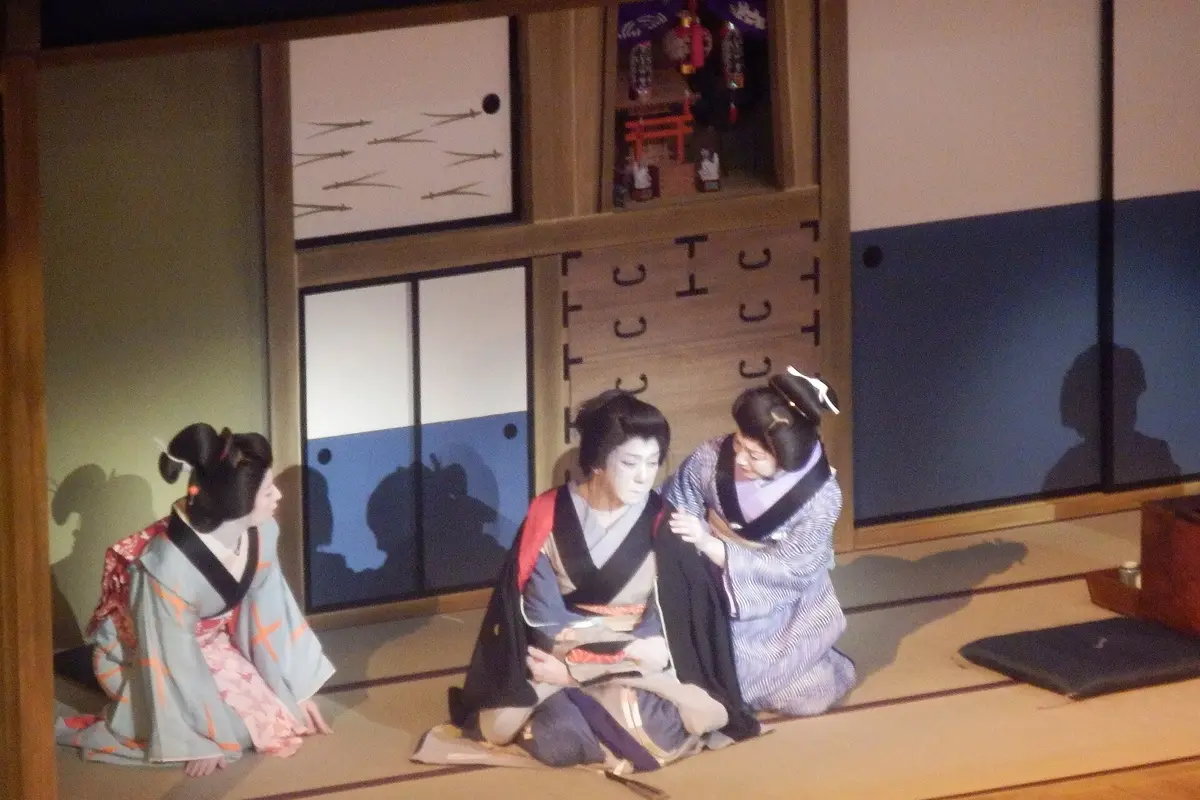
Nakamura Utaemon VI (1917 to 2001) is regarded as the greatest onnagata of the post-war period. He took the Utaemon name in 1951, was named a Living National Treasure in 1968, the youngest person ever given the title, and served as an artistic director of the Kabukiza. Bandō Tamasaburō V, born in 1950, first appeared on stage at seven and took his name in 1964. He is the most popular and celebrated onnagata on stage today, and became a Living National Treasure in 2012. For a fictional view, the 2025 film Kokuho follows two rival onnagata over decades. It became Japan's highest-grossing live-action film.
Read next: Kabuki's acting dynasties and the shumei ceremony
Can women perform Kabuki?
Yes, outside the mainstream. The ban on women ended in the Meiji era (1868 to 1912), and some women went on to play onnagata roles, though it stayed uncommon. Some local Kabuki troupes still cast women in female roles, and an all-female troupe, the Ichikawa Shōjo Kabuki, debuted in 1953 to strong acclaim. Most Kabuki troupes have stayed entirely male, though. The Kabuki staged by Shochiku at the Kabukiza remains an all-male theatre form, so every woman you see on that stage is played by a man.
Where to watch onnagata at the Kabukiza
Some pieces put the onnagata at the centre. The programme changes every month, so check the line-up for your dates on the Kabukiza's own performance pages before you book. The full-show ticket we link to is sold by Shochiku and includes the captioning device, in English or simplified Chinese, so you can follow the story as it unfolds. Pieces where onnagata technique is the main event include:
- Musume Dōjōji: a single onnagata dances solo for nearly an hour, with quick on-stage costume changes
- Kagamijishi: one dancer plays a refined young lady-in-waiting, then the wild spirit of a lion
- Meiboku Sendai Hagi: Masaoka, one of Kabuki's great nursemaid roles, hides her grief for her son
Read next: Kabukiza tickets: how to book Kabuki
Who this isn't for
If you prefer naturalistic acting, onnagata technique can feel distant at first: the voice, posture and pace are stylised on purpose. If you were hoping to see women in Kabuki, the Kabukiza won't offer that. A full show runs three to four hours with intermissions, which is long if you only want a taste, and a single-act seat is the shorter option. The full-show ticket also isn't suitable for children under 4.
Frequently asked questions
Are all Kabuki actors male?
Yes, in mainstream Kabuki. Every role at the Kabukiza, male or female, is played by a man. Women were banned from the stage in 1629, and mainstream Kabuki has kept the all-male convention since, although some local troupes do cast women.
Why were women banned from Kabuki?
To keep public order. The Tokugawa shogunate banned women in 1629 after fights in the audience and the close links between performers and prostitution. The young men's troupes that replaced them were banned for similar reasons in 1652.
Can onnagata play male roles?
Yes. Kabuki actors have long played both male and female characters, and every actor is expected to learn onnagata technique. Some specialise in female roles for most of their careers, as Bandō Tamasaburō V has. Some female roles, such as villainesses, traditionally go to actors of male roles.
What is the difference between onnagata and oyama?
There is no difference in meaning. Both are readings of the word for actors of female roles. Onnagata is the usual reading in Kabuki, while oyama mostly appears in compound titles such as tate-oyama, the leading onnagata of a company.
Who is the most famous onnagata?
Bandō Tamasaburō V, born in 1950, is the most popular and celebrated onnagata on stage today, and a Living National Treasure since 2012. Among earlier actors, Nakamura Utaemon VI (1917 to 2001) is regarded as the greatest onnagata of the post-war period.
Can women be onnagata?
Outside the mainstream, yes. Women began playing onnagata roles after the ban was lifted in the Meiji era, and some local troupes still cast them. In the Kabuki staged by Shochiku at the Kabukiza, female roles are played only by men.
Sources
- Remarkable features unique in Kabuki (KABUKI WEB, Shochiku)
- Costumes, makeup and wigs (KABUKI WEB, Shochiku)
- History: the beginning of Kabuki (Japan Arts Council)
- Characters and costumes (Japan Arts Council)
- Kyoganoko Musume Dojoji (Japan Arts Council)
- Onnagata (Wikipedia)
- Kabuki (Wikipedia)
- 女形 / Onnagata (Japanese Wikipedia)